
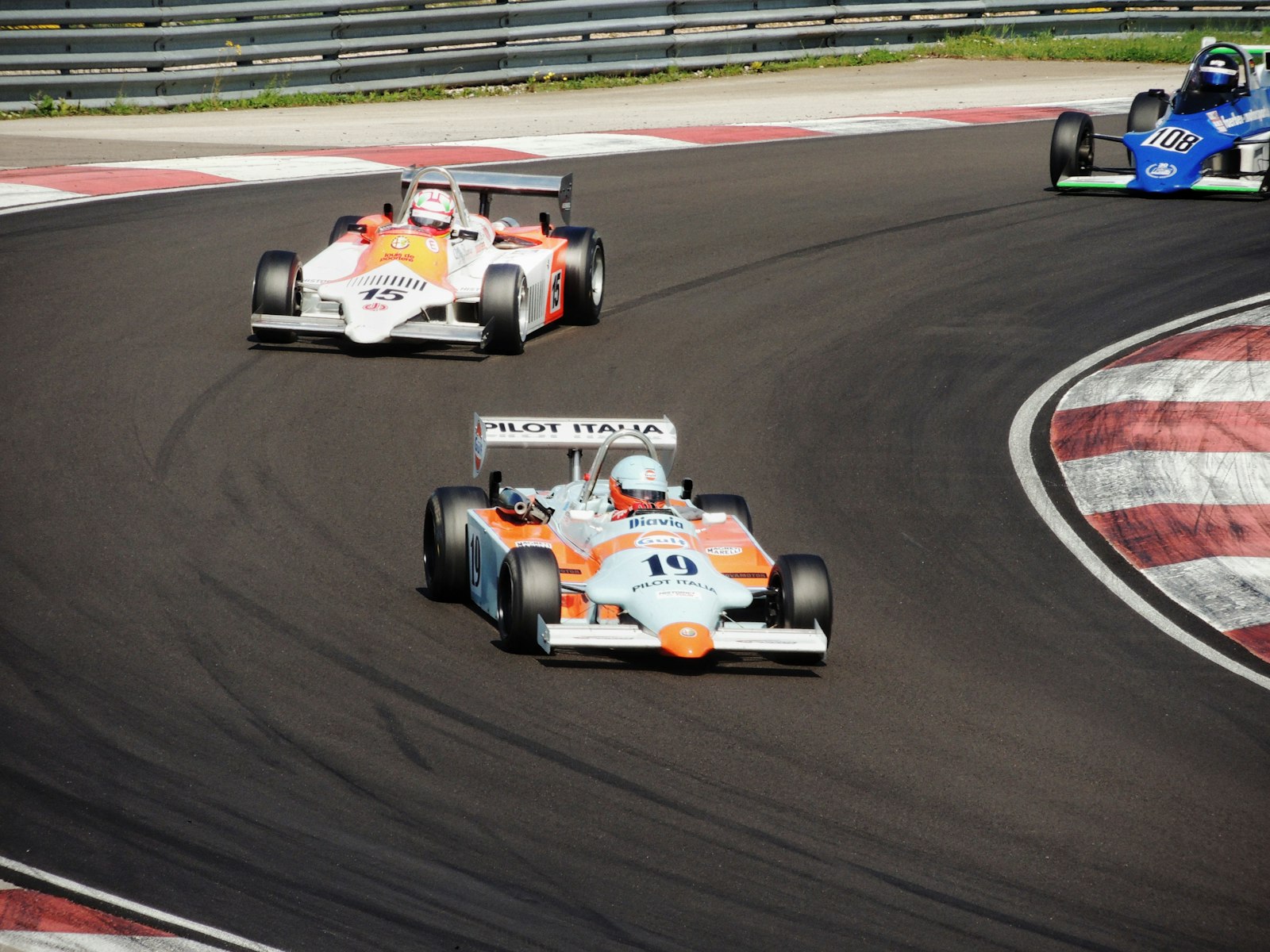
History is not fair, and motorsport history is less fair than most. It remembers the cars that won the right races at the right moment, and it quietly forgets the ones that were brilliant on the wrong weekends. We all know the Ford GT40, the Ferrari P-cars, the Porsche 917. Ask even a serious enthusiast about the small, fierce sports-racers that filled the grids beneath those titans — the privateer specials, the clever dead-ends, the cars that led races they did not finish — and you mostly get a shrug. This is a piece about one of those shrugs.
I want to talk about the kind of car typified by the early-1960s mid-engined specials that European constructors built in tiny numbers to chase the works teams: light, low, beautifully made, technically daring, and ultimately crushed not by being slow but by being small. The archetype here is the breed of car that sat between the front-engined era that was ending and the mid-engined revolution that was beginning — cars caught, as it were, on the hinge of history, and forgotten precisely because the door swung past them.
A clever idea, badly timed
Consider the engineering logic. At the start of the 1960s the front-engined sports-racer was dying. Cooper had shown in Formula 1 that the engine belonged behind the driver, and the sportscar world was scrambling to catch up. The big factories — Ferrari, then Ford, then Porsche — had the resources to make that transition cleanly. The small constructors did not. So they improvised, and in improvising they produced some of the most interesting cars of the decade: spaceframe chassis of slender tubes, often dozens of them triangulated into a structure that weighed almost nothing and flexed alarmingly; tiny, high-revving engines breathing through banks of carburettors; bodywork shaped by eye and instinct rather than a wind tunnel, and lovely for it.
The Maserati Tipo 61 — the famous Birdcage — is the one example of this breed that history did keep, because it won at the Nürburgring in 1960 and because its frame of more than two hundred small tubes is irresistible to photographers. But the Birdcage had cousins: cars built on the same philosophy by smaller marques and lone engineers, just as light, just as clever, that never got the one big result that buys a car its place in the canon. They led at Sebring and broke. They were quickest in practice at the Targa Florio and crashed on a stone wall. They qualified ahead of the factory cars and then ran out of money, or oil, or luck.
Why it lost
It is tempting to say these cars lost because they were fragile, and that is partly true — a spaceframe of fifty hand-brazed tubes is only as strong as its worst joint, and a tiny screaming engine tuned for the absolute limit does not forgive a long race. But fragility is not the whole story. They lost, mostly, because of the brutal arithmetic of endurance racing, which does not reward the fastest car. It rewards the car that is fast enough and still running at the end, and that is a different thing entirely.
The small constructors could build a car that was quicker than a Ferrari over a single flying lap. What they could not do was build the supporting cathedral around it: the spares, the development budget, the second and third engines, the squad of mechanics who could rebuild a gearbox between sessions. A privateer special arrived at Le Mans with one car, one engine, two tired men, and a prayer. The factory arrived with three cars, a truck of spares, and the assumption that one would survive. Over twenty-four hours, the cathedral wins. It almost always wins.
- The chassis was a triumph of lightness — and a nightmare to repair quickly when a tube cracked under racing loads.
- The engine made remarkable power for its size but was tuned so close to the edge that a long race was an act of provocation.
- The team had genius and no depth, which is the oldest tragedy in motorsport.
Why it deserves a second look
So why care about a car that lost? Because the cars that lost are often where the real engineering lives. A winning factory car is a triumph of resources; a brilliant privateer special is a triumph of ideas, built by people who could not afford to brute-force a problem and so had to out-think it. When you look closely at these forgotten sports-racers, you find solutions that the big teams later adopted and got the credit for: clever weight distribution, early experiments in aerodynamic shaping, suspension geometry worked out with intuition where the factories used budget.
There is also the simple fact that they are, almost without exception, more beautiful than the cars that beat them. Bodywork shaped by a man with a hammer and an eye has a quality that a wind-tunnel shape does not: it is a little wrong, a little personal, and entirely alive. Stand next to one of these surviving specials at a historic meeting — and a handful do survive, lovingly rebuilt by the restorers I have written about elsewhere — and you are looking at a piece of sculpture that happens to do 160 miles an hour.
The case for the also-rans
Historic racing, at its best, is an act of correction. It gives a second life to cars that the period results sheet treated unkindly. At the Goodwood Revival and the Le Mans Classic, a forgotten special that retired on lap forty in 1962 can, sixty years later, run the full distance and finish ahead of the famous names it once practised alongside — because now it has the cathedral around it that it never had in period: the spares, the modern metallurgy in its rebuilt joints, the patient restorer who solved the oil-gallery problem that killed it the first time.
When that happens — when a car that history wrote off comes howling past the grandstand and takes a flag it never took when it mattered — you feel the unfairness of the record being, just slightly, set right. The driver who broke down at Sebring in 1962 is long gone. The engineer who brazed those tubes in a cold shed is gone too. But the idea they had, the brave light clever idea, is still on the track, still quick, still beautiful, finally finishing the race.
That is why you should care about a car you have never heard of. Not because it won — it didn't, that was rather the point — but because it was good, and good was not enough, and the only place left where good can finally be enough is the historic grid. Go and find one. Stand next to it. Listen to it start. And spare a thought for every brilliant car that lost a race it should have won, and waited sixty years for someone to notice.