
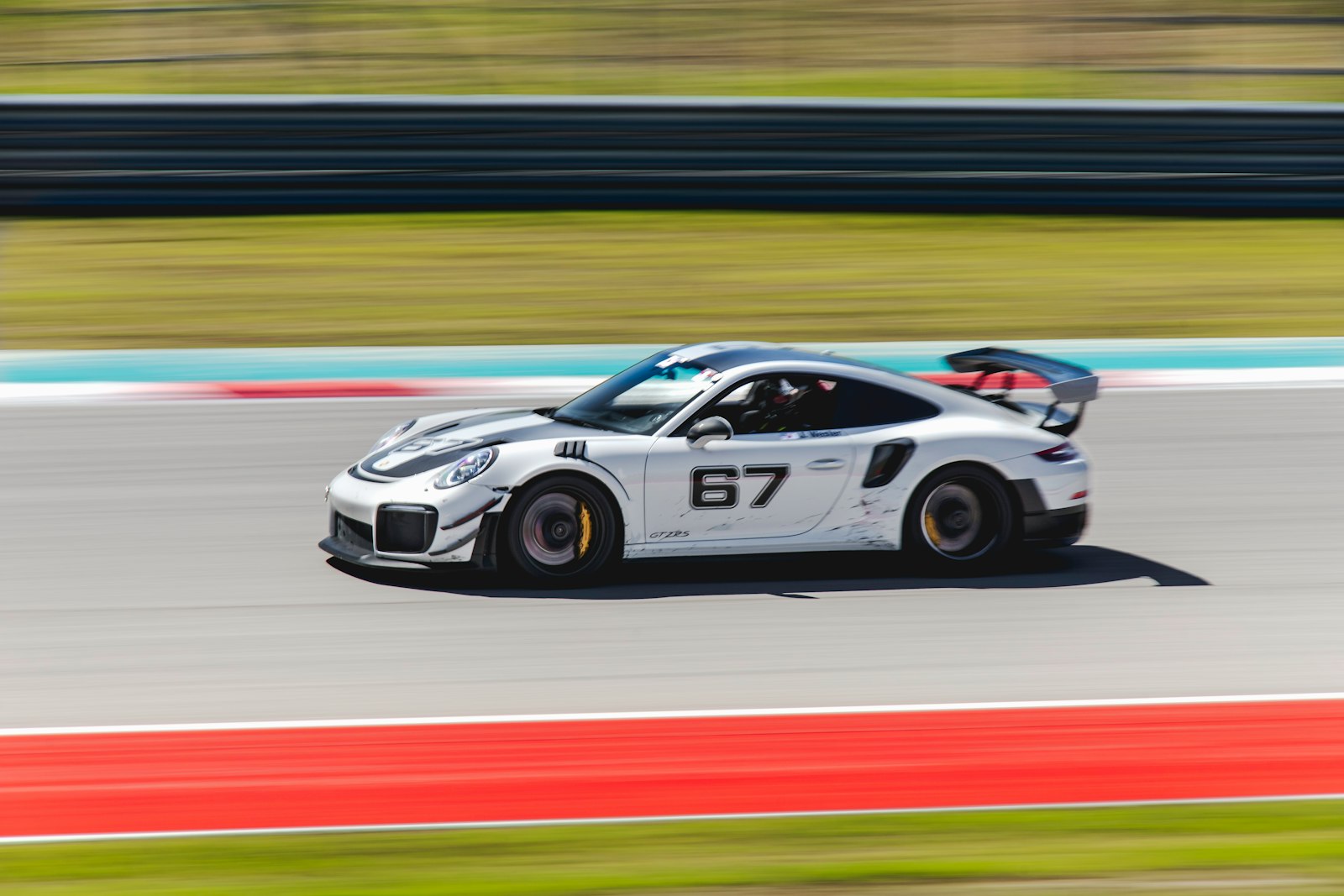
You don't win Le Mans on Saturday afternoon. You win it at 3am on Sunday, when the air temperature has dropped eight degrees, the track has come back to the cars, and a strategist who has been awake for nineteen hours makes a call that looks like nothing on the timing screens and turns out to be everything. That is how this one went. The headline says the No. 7 Hypercar took it by fifty-one seconds. The truth is it took it during a full-course yellow at half past three in the morning, and the rest of the race was just the paperwork.
Let me walk you through it, because the way this was won is the most instructive thing I have seen at this circuit in years, and almost none of it happened where the television cameras were pointed.
The first twelve hours: a phoney war
For the first half of the race, the front of the Hypercar field did what the front of the Hypercar field always does now — it bunched. Balance of Performance has flattened the top class to the point where the leading nine cars were covered by under forty seconds at the eight-hour mark, and nobody could pull a meaningful gap because nobody had a meaningful pace advantage. The LMDh cars were marginally kinder on their fronts; the LMH cars carried a fraction more straight-line speed down the Mulsanne. It cancelled out. Every stint was a queue.
So the early game was fuel. With the energy allocation capped per stint, the teams running the tightest lift-and-coast were the ones turning a 38-lap fuel window into a 39-lap one — and one extra lap per fuel run, across twenty-four hours, is a free pit stop and a half. The No. 7 crew were ruthless about it. Their middle driver, in particular, was lifting for the Porsche Curves so early in the night that you could hear it as a change in the engine note on the approach. It cost him maybe a tenth a lap. It bought them the race.
The night, and the tyre that wouldn't die
The night stints are where Le Mans separates the careful from the merely fast. Track temperature falls, grip rises, and the soft compound that was greasy and overheating at four in the afternoon suddenly becomes the tyre you can quadruple-stint. The teams who read that window correctly stopped changing rubber. The No. 7 ran one set of softs for four consecutive stints through the darkest part of the night — roughly two hours and forty minutes on a single set — and the degradation curve flattened out so completely that their last lap on those tyres was within three tenths of their first.
That is four tyre changes they didn't make. Call it ninety seconds of stationary time saved, plus the time not lost driving in and out of the pit lane, plus the absence of four out-laps on cold rubber. Their nearest rival double-stinted at most and changed when the temperature looked marginal. Both were defensible calls. Only one was right, and you could only know which after the fact — which is exactly why endurance strategy is so cruel. You commit to a tyre philosophy at midnight and find out at dawn whether you were brave or stupid.
The undercut that won it
Here is the moment. At 03:31 a GTE car put itself into the barriers at Indianapolis and brought out a full-course yellow. Under FCY the whole field slows to a delta and the gaps freeze — but the pit lane stays open, and a stop made under a yellow costs you a fraction of what the same stop costs under green, because everyone else is crawling while you're servicing the car.
The No. 7 pit wall had two laps of fuel left in the tank. The leading No. 51 had four. Conventional thinking says you stay out — you've got more fuel, you can run longer once the green flag drops, you control the race. The No. 7 strategist did the opposite. She pulled her car in immediately, took fuel and left the same tyres on, and sent it back out having lost almost nothing to the frozen-gap delta. Two laps later, when the green came back, the No. 51 had to make its stop under racing conditions and lost the full forty-odd seconds of a green-flag pit cycle.
That was the race. Fifty-one seconds at the flag, twenty hours later, and forty of them were generated in a single decision during one safety car. The rest of the night was the No. 7 managing a gap it had already banked. People will say it was won on reliability or on driving. It was won on a strategist refusing the obvious option at half past three in the morning.
The heartbreak
There is always heartbreak, and this year it belonged to the No. 93. They led for a combined six hours, had the fastest single lap of the race, and were quietly the best car on track from the eighteen-hour mark onward. With ninety minutes to go they were second and closing — three tenths a lap, enough to make the leader nervous, not enough to be certain. Then a sensor flagged a pressure anomaly on the left-rear, the team called the car in to check it rather than risk a deflation at 200mph on the Mulsanne, and the four minutes that stop cost them dropped them to fifth. The tyre was fine. It is always the right call to check. It is also the call that ended their race, and both of those things are true at once.
The driver climbed out without a word, sat on the pit-lane barrier for a long time, and then went and shook the hand of every mechanic on the car. That is endurance racing. You can do everything correctly for twenty-two and a half hours and lose to a precaution you'd take again every single time.
What it tells us
The lesson of this Le Mans is the lesson of every Le Mans now: the cars are too close for pace to decide it, so the race is decided by the people on the pit wall who can hold a fuel number in their head, model a safety car they can't predict, and have the nerve to do the unobvious thing at the worst hour of the night. The No. 7 didn't have the fastest car. They had the calmest strategist, the most disciplined fuel-saving, and a tyre read that flirted with recklessness and came good. In a class this tight, that is the whole sport.
I have watched this race for thirteen years and I am more convinced than ever that the most important seat in the team isn't in the car. It's the one in front of the timing monitor, with a cold coffee and a fuel spreadsheet, at three in the morning.