
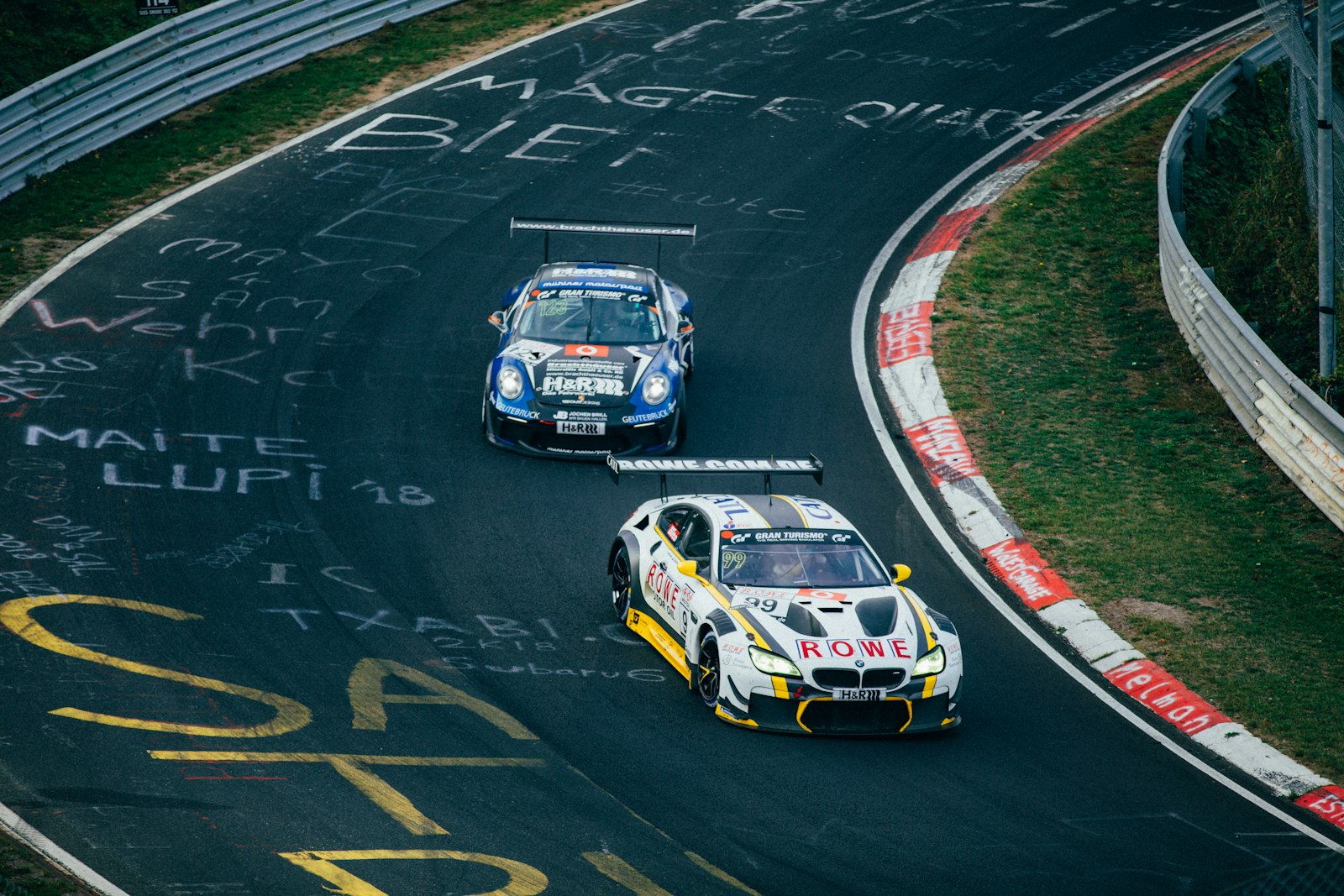
Imola is a circuit that punishes you for thinking it is simple. It has a low number of genuine overtaking spots — realistically the run to Tamburello and a hopeful lunge into the Rivazza complex — so the conventional wisdom every year is that the race is decided on Saturday afternoon, on the grid. This year it was decided on Friday, in a fifteen-minute window of the second practice session that almost nobody in the grandstands would have noticed.
I want to walk through this one carefully, because it is a clean example of how a modern grand prix is actually engineered, rather than how it looks on the broadcast. The headline is that the winner ran a one-stop strategy that looked impossible on Friday and was obvious by Sunday. The interesting part is the bit in between.
What the Friday data showed
The story starts with tyre degradation, and specifically with the gap between the soft and the medium compound. On a green, rubbered-out Friday track, the soft was roughly four tenths a lap quicker over a single flying lap. That is the number that sells qualifying. But the number that wins races is the degradation slope — how much lap time you lose per lap as the tyre wears — and on the long runs that closed FP2, the two compounds told completely different stories.
The softs fell off a cliff. Teams running them on twelve-to-fifteen-lap stints were losing somewhere between 0.10 and 0.13 seconds per lap of cumulative degradation, and crucially the curve was getting steeper, not flatter, as the run went on. That is thermal degradation: the surface of the tyre overheats, the grip goes, the driver slides more, and sliding generates more heat. It feeds on itself. The mediums, by contrast, degraded almost linearly — a flat, predictable 0.05 a lap — and the hards, on the limited running we saw, were basically a straight line.
So the picture by Friday night was this: the soft is a qualifying tyre and a liability in the race. The medium is a race tyre. The hard is a tyre you could, in theory, run for forty laps without it ever falling off a cliff. The question the strategists were chewing on overnight was whether you could make a one-stop work — medium then hard, or hard then medium — on a circuit where track position is everything and the pit lane costs you the better part of twenty-two seconds.
Why most of the grid didn't trust it
The reason a one-stop looked dangerous is the same reason Imola is Imola: you cannot overtake, so if your one-stop leaves you on old, slow tyres in clean air, you are fine, but if it leaves you on old tyres with a queue of fresher cars behind you, you are a moving chicane and you lose four positions in three laps. A two-stop is the safe play. It keeps the tyre always in its happy window, it gives you a fresh set for the final stint, and it lets you race rather than defend.
The trade-off is the twenty-two seconds. Two stops costs you a pit lane transit you do not get back, and it exposes you to the lottery of where you rejoin in traffic. On a normal circuit the extra grip of the two-stop pays for the extra stop. At Imola, with overtaking this hard, the maths is genuinely marginal — and that is exactly the kind of marginal call that gets decided by the safety car.
The race: a five-lap window
Pole went to a car that qualified on softs and converted cleanly into the lead at Tamburello. For the first stint that is exactly what you would expect — the leader controlled the pace, kept the gap to second around 1.4 seconds, and managed the soft tyre as long as he dared. The early laps were a procession. Anyone watching for action was bored. Anyone watching the tyre temperatures was not.
The decisive moment came on lap 19. The car running third — call it the challenger — had started on the medium, sacrificing two grid positions for strategic freedom, and his engineers saw the leader's soft beginning to drop. They pulled the trigger on an undercut: pit early, bolt on a fresh hard, and use the grip advantage of new rubber to set a lap that is two seconds faster than the cars still circulating on worn tyres. Do that for two or three laps and when the leader finally stops, he rejoins behind you. That is the undercut in one sentence: you gain track position by being on fresh tyres while your rival is on old ones during the pit-stop exchange.
It worked, but only just. The leader covered the move one lap later, and the two of them came out of the sequence separated by eight tenths, the challenger now ahead, both on the hard tyre, both committed to a one-stop they now had to make survive to the flag. Twenty-eight laps to go on a tyre nobody had run that long all weekend.
Then the safety car. A backmarker put it in the gravel at Acque Minerali on lap 31, and the race neutralised for five laps. This is where the Friday data paid off. The teams that had committed to the one-stop got a free regeneration of their tyres — the slow laps behind the safety car let the rubber cool and the surface recover, effectively resetting the degradation clock. The cars that had planned a two-stop suddenly had a problem: pitting under the safety car was cheap, but it dropped them into traffic they could not pass, and not pitting meant their strategy no longer had a fresh-tyre advantage to cash in.
How it was actually won
The restart on lap 36 is where the race was settled, and it was settled by tyre management, not by a pass. The challenger, leading, had to do two contradictory things at once: build a gap on the restart while the tyres were briefly cool and grippy, then nurse those same tyres for twenty laps without ever letting them tip into the thermal-degradation spiral we saw on Friday. He drove the entire final stint about three tenths off the absolute pace the car was capable of — lifting fractionally earlier into Tamburello, short-shifting through the Variante Alta, never once asking the front-left for everything it had.
The leader behind him could not do the same, because he had to push to close the gap, and pushing at Imola means sliding, and sliding means heat. By lap 50 his front-left was gone. The gap stabilised at 2.1 seconds and stayed there to the flag. There was no dramatic final-lap move. The race was won by the driver who was willing to go slower in order to go faster over twenty laps — the oldest trick in tyre management, executed on data that was sitting in a Friday-night engineering report.
The tenths nobody saw
Here is the part I keep coming back to. The winning margin was 2.1 seconds. The undercut on lap 19 was worth roughly 0.8 of that. The safety-car timing was worth a chunk more — it converted a marginal one-stop into a comfortable one. But the foundation of all of it was that fifteen-minute long run on Friday afternoon, where one team's tyre engineers correctly read that the soft's degradation slope was getting steeper and the hard's was flat, and built a race around it while half the paddock was still assuming Imola would be decided on the grid.
That is the thing about this circuit, and about modern Formula 1 generally. The overtaking is rare, so the racing migrates into the data. The most aggressive move of the weekend was not a pass. It was a strategist on Friday night looking at a degradation curve and deciding to trust it. By Sunday it looked obvious. It always does, afterwards.