
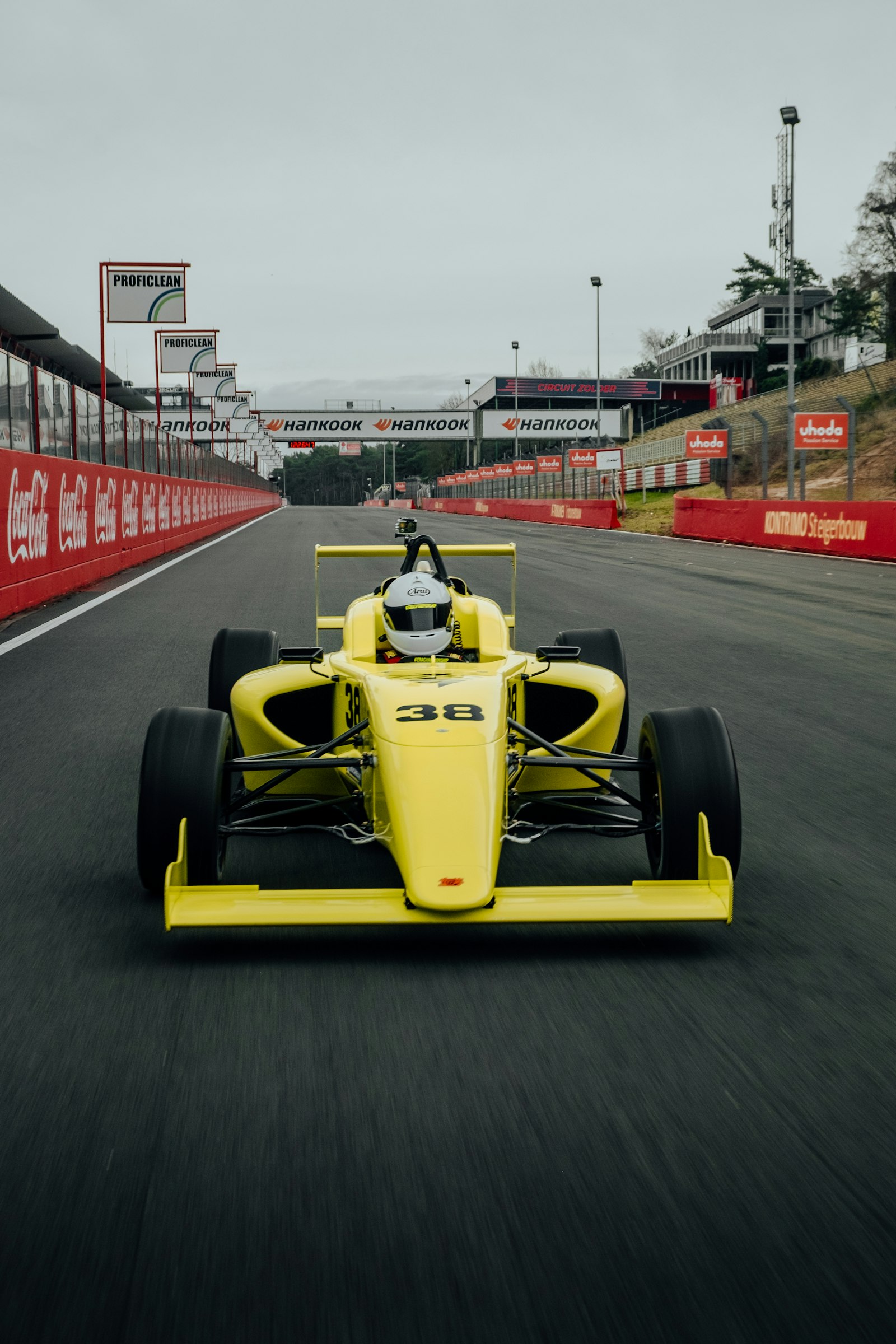
We are roughly a third of the way through the season, and the championship has settled into the shape it will probably keep until the development cycles diverge: two cars, two drivers, separated by eighteen points, trading wins at circuits that suit one or the other. The narrative on the broadcast is about the drivers, because that is what sells. The real story is about the cars, and specifically about the rate at which each of them is getting faster. Championships at this level are not won by who is quickest today. They are won by who is improving fastest, and that is a question you answer with development trajectories, not lap times.
So let me lay out where this title is actually being fought, and try to be honest about how much of it is knowable and how much is guesswork. I will keep the specifics deliberately general, because anyone who tells you they know exactly how a rival's upgrade is going to perform in eight races' time is selling something.
The two cars are good at different things
The first thing to understand is that the two leading cars are not the same car with different paint. They have fundamentally different aerodynamic philosophies, and you can read it in where they win.
One of them is a high-downforce car. It is strongest in the slow and medium-speed corners, it is gentle on its tyres because it generates grip aerodynamically rather than asking the rubber to do all the work, and it comes alive at circuits with lots of direction changes — the Imola-and-Hungary type of track. Its weakness is the straights, where all that downforce becomes drag and costs it top speed.
The other is a low-drag car. It is built to be quick in a straight line and through high-speed corners, it qualifies brilliantly at power circuits like Monza or Spa, and it can defend a lead because nobody can get close enough on the straights to attempt a move. Its weakness is the slow stuff and tyre temperature — it tends to overheat its rears when it has to push through traffic, because it leans harder on the tyre to make up for the downforce it deliberately gave away.
This is why the championship has been trading blows rather than running away. The calendar alternates between circuits that flatter one philosophy and circuits that flatter the other. Neither car has a structural advantage. The advantage, when it comes, will come from development — from one team finding more performance per upgrade than the other over the back half of the season.
The upgrade war, and the handbrake on it
Here is the dynamic that will, I think, decide the season. The team leading the championship has a problem that has nothing to do with its car: it has the least wind-tunnel time and the least CFD allowance of anyone at the front. That is by design. The regulations deliberately give the team at the top of the standings the smallest aerodynamic-testing allocation and the team at the bottom the largest, on a sliding scale, to stop the leader running away and to claw the field back together. It is a handicap system, and it is a real one.
What that means in practice is that the car currently ahead in the championship is developing more slowly than the car behind it, purely because it is allowed fewer hours in the tunnel and fewer simulation runs. The chasing team can throw more variations at the wall, find more performance, and bring upgrades more often. So even if the leading car is marginally quicker today, the trajectory may favour the one behind — the development lines could cross somewhere around mid-season, and if they do, the second half of the year flips.
The counter-pressure is the cost cap. Every upgrade costs money, the budget is finite, and a team that develops aggressively in the first half of the season has less to spend in the second. So there is a strategic gamble buried in every upgrade decision: bring it now and gain points today, or hold the spend and bring a bigger package later. Get that timing wrong — spend too early, or develop a floor that does not correlate and have to bin it — and you have burned budget you cannot get back. The upgrade war is as much a budgeting problem as an engineering one.
Reliability is the quiet variable
Everything above assumes both cars finish races, and at this level that is not a safe assumption. Reliability is the least glamorous part of a title fight and frequently the decisive one, because a single non-finish is worth far more than any upgrade. A floor upgrade might be worth a tenth a lap, which over a race is a handful of seconds and maybe one or two positions — call it five points on a good day. A power-unit failure that ends your race is a swing of twenty-five points or more, in a single afternoon, with nothing you can do about it.
There is a structural reason to watch this closely. The number of power units each driver is allowed for the season is capped, and exceeding the allocation means a grid penalty. So every team is managing a balancing act: run the engine hard enough to be competitive, but conservatively enough that the components survive the whole calendar. A team that has been pushing its power unit aggressively to stay in the fight early may find itself either taking a grid penalty late in the season or having to turn the engine down to nurse worn components — and either of those, at the wrong race, can cost a championship that the lap times alone would have won.
My read is that this is the genuine unknown in the title fight. Both cars are quick. Both teams develop well. But one of the two power units has, on the evidence of the opening races, looked marginally more stressed — a couple of curtailed sessions, an engineer's body language in the garage, the sort of thing you notice from the press room that never makes the broadcast. If that turns into a failure at the wrong moment, it decides the season more cleanly than any floor upgrade ever could.
Where this is actually decided
So where does the title get settled? Not, I think, at the obvious flagship races. It gets settled at the circuits that punish each car's weakness. The high-downforce car has to survive the power tracks — it cannot afford to qualify sixth at the low-drag circuits and spend the whole race stuck behind cars it cannot pass. The low-drag car has to survive the twisty, tyre-hungry circuits without cooking its rears. Whichever team patches its car's weakness fastest, through development, wins the points on the days that were supposed to be its bad ones. The championship is decided on the bad days, not the good ones.
If I had to call it today, I would say the trajectory favours the chasing car — more tunnel time, more development headroom, a clearer upgrade path — provided its power unit holds together. That is a real provided. The leading team has the points and the cleaner reliability record, and points in hand are worth a great deal when the development race is this close. Eighteen points is nothing and everything. It is one bad afternoon.
What I am certain of is that this will not be decided by who is fastest at the next race. It will be decided over the next dozen, by which team's wind tunnel tells fewer lies, which budget is spent more cleverly, and which power unit makes it to the final flag. The drivers will get the trophy and the headlines. The championship is being won, right now, by people you will never see, in buildings with no windows, arguing about tenths.